COLONOSCOPY
What is colonoscopy?
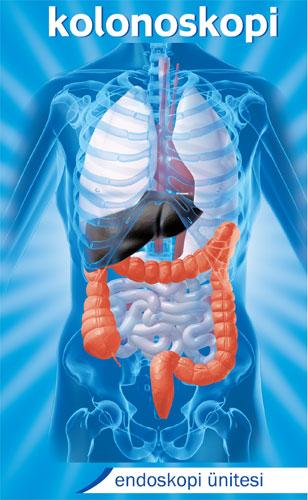
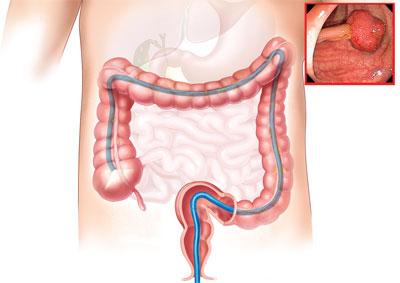
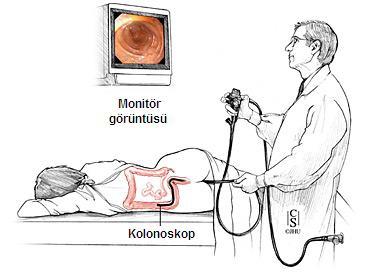
Colonoscopy is an imaging method that allows direct visual inspection of the large intestine and the last part of the small intestine (see figure 1). This process is performed with the help of a thin, soft and bendable tube-shaped instrument with a light and micro camera at the end.
Figure 1. Colonoscopy
Why is colonoscopy necessary?
Colonoscopy is the most reliable method used in the diagnosis and treatment of colon diseases:
* Unexplained abdominal pain or weight loss
* Prolonged diarrhea or constipation,
* Anemia unresponsive to treatment,
* Blood in the stool, and
* Performed for early diagnosis and treatment of intestinal polyps (flesh protrusions).
Why are intestinal polyps important?
* Colon cancer is one of the most common types of cancer.
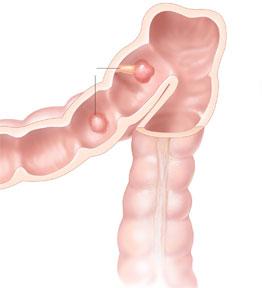
* All colon cancers originate from fleshy protrusions called polyps (see figure 2).
* However, polyps usually do not cause any complaints until they become cancerous.
Figure 2. Colon polyps
* Early diagnosis and removal of intestinal polyps with the help of colonoscopy definitely prevents the development of cancer.
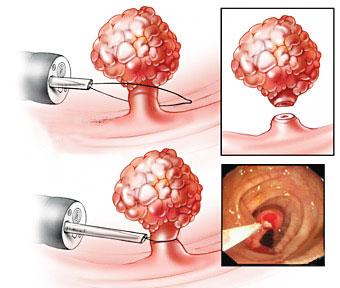
* This procedure is performed with a painless colonoscopic surgical method called polypectomy during the colonoscopy operation (see figure 3).
Figure 3: Polyp removal procedure (polypectomy)
* Today, even if there is no complaint, it is now accepted all over the world to follow up with a colonoscopy every 5 years starting from the age of 50 for the presence of polyps in order to prevent colon cancer. In individuals with a family history of colon cancer, it is recommended to increase the follow-up age earlier.
Do I need to prepare before colonoscopy?
For a good examination, your colon must be completely clean. For this purpose, you will need to make the following preparations in accordance with the appointment time given to you:
Preparation
* You should not take any solid food the day before the procedure until colonoscopic operation, but you should drink plenty of water, weak tea, broth, chicken broth, compote juice, apple juice and clear liquids without grains and milk until 22:00 on the same day.
* On the day before the procedure, you need to drink 45 ml of fleet oral at 14:00 and 1 box of fleet oral at 18:00, a total of 2 boxes of fleet oral at 18:00. There are drugs that I am constantly using, what should I do? You can take most drugs that you need to use continuously (such as blood pressure, heart, thyroid drugs) 3 hours before the procedure together with a small amount of water. However:
* If you are using aspirin, you should stop it at least 5 days before the procedure, and if you are using rheumatism drugs, iron or vitamin drugs you should also stop using them 5 days before.
* If you are taking medication for diabetes or if you are using blood thinners (such as Coumadin), you should warn your doctor about this.
* If you have had rheumatic heart valve disease, previous pericarditis (endocarditis) or heart valve replacement surgery, inform the endoscopy nurse of this, as you will need to use preventive antibiotics before endoscopy. What should I bring with me when I come?
* Leave your jewelry and valuables at home on the day of operation.
* You should definitely bring your endoscopy request form, your previous examinations on your disease, and your previous endoscopy reports, if any.
Will I feel discomfort during the colonoscopy?
In our endoscopy unit, we apply a special anesthesia called “Conscious Sedation†with drugs given intravenously to all our patients. In this method, you will not have a complete loss of consciousness as in general anesthesia, but you will become quite relaxed and sleepy, and you will not be disturbed by the operation. In addition, when you wake up after the colonoscopy is over, you will usually not remember the operation at all, thanks to the special effect of the drugs used. Most importantly, you will definitely not have pain, shortness of breath or nausea-vomiting during the operation.
Can I return home with my car?
No. Since the drugs given during the colonoscopy can cause drowsiness, dizziness and distraction, you should not drive for at least 8 hours after the operation and stay away from work that requires attention. For this reason, you should definitely bring a relative who can help you on your way home.
How will the colonoscopy be performed?
* All your procedures will be performed by an experienced Endoscopist.
* Your doctor will inform you of the operation to be performed and the problems that may be encountered, make a detailed medical inquiry and then ask you to sign a consent form stating that you consent to the operation.
* After you are taken to the endoscopy room, you will be asked to wear a special patient gown and disposable colonoscopy shorts, and to remove your glasses or dentures, if any.
* Throughout the operation, you will be lying on your left side.
* After you are given sedatives and pain relievers intravenously and you are well relaxed, your doctor will advance the colonoscope through the anus into your colon (see figure 2). You will not feel pain and distress due to the medications given during the operation.
* The operation will take between 15 minutes and 30 minutes, depending on the condition of your bowel cleansing, your disease and bowel structure.
Figure 4. Colonoscopy Operation
What will be done after colonoscopy?
* After the operation, you will stay in the rest room under the supervision of a nurse for about half an hour until the effect of the sedative drugs wears off.
* When you recover, you will be informed in detail of the colonoscopy findings by your doctor.
Are there any risks with a colonoscopic examination?
During the colonoscopic examination, problems such as side effects of sedative drugs, bleeding and perforation in the intestines may be encountered. However, the possibility of encountering such a problem is extremely rare and can be treated with blood transfusion or surgery if necessary. If you have severe abdominal pain, fever, chills, bloody stools or severe vomiting within 72 hours after the operation, please inform us.
Are the tools used disinfected?
After each colonoscopy, all instruments used are disinfected in accordance with the criteria set by the American Gastroenterology Society, after first undergoing a mechanical cleaning process, by keeping them in 2% glutaraldehyde solution for 15 minutes. In addition, microbiological culture studies of the endoscopes used are carried out regularly (every month) under the supervision of a microbiologist at our hospital, and controls are performed on the adequacy of the disinfection process.
Assoc. Prof. Ahmet Tekin

General Surgeon